Initiatives
Golisano Health Leadership Awards
 Special Olympics, the largest public health organization for people with intellectual disabilities, launched the Golisano Health Leadership Awards in September 2016 to recognize the extensive work of individuals and organizations around the world who are improving the health of people with intellectual disabilities and advancing the year-round health work of Special Olympics. Read more
Positive Exposure
 The Golisano Foundation presented the premiere of the photographic exhibition, Positive Exposure - Change How You See, See How You Change, from October 2-18, 2015 at George Eastman Museum in Rochester, NY. This exhibition was created in celebration of the Golisano Foundation's 30th anniversary and featured 20 portraits of people living with intellectual disabilities, providing the opportunity to see beyond all labels or disabilities. This exhibition presented our ambassadors as the beautiful, vibrant individuals that they are. Read more
Move to Include Awards - 2015
 The Golisano Foundation presented its first ever Move to Include Awards on October 15th to six individuals: Julie J. Christensen, PhD, LMSW; Rick Guidotti; Daniel M. Meyers; Martha E. Mock, PhD; Joseph A. Ruffolo; and Shirley F. Szekeres, PhD, CCC-SLP. The Move to Include Awards recognize those who believe and act in the purest realm of the essence of "move to include." The award is named after the Move to Include initiative launched in 2013 with WXXI to advance inclusion. Read more
Move to Include
 WXXI and the Golisano Foundation have joined forces to launch MOVE TO INCLUDE, an initiative designed to promote inclusion for people with intellectual and physical disabilities. Through programming and special events, the goal is to build a more inclusive community by inspiring and motivating people to embrace different abilities and include all people in every aspect of community life. Read more
Healthy Communities
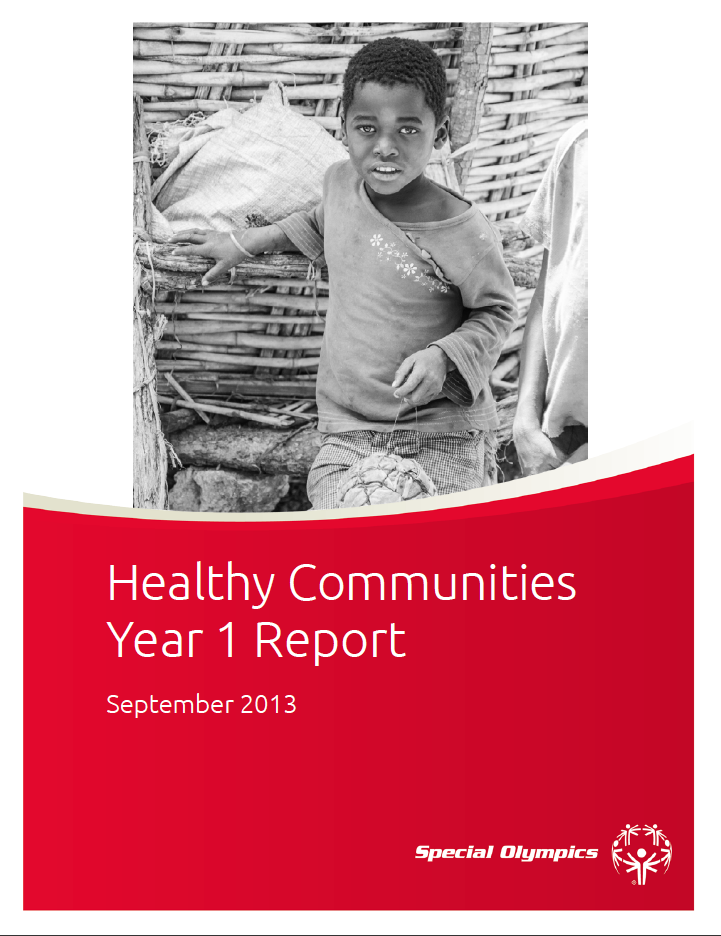 With an initial $12 million donation from Tom Golisano in 2012, Special Olympics was able to launch Healthy Communities, an initiative to expand its health-related services to people with intellectual disabilities. The program was a success prompting Mr. Golisano to donate an additional $25 million in 2015 to expand the program to more than 100 Healthy Communities over the next five years.
Healthy Communities was first launched in eight countries (Mexico, Peru, Romania, Malawi, South Africa, Malaysia, Kazakhstan and Thailand) and six states in the U.S. (Arizona, Florida, Kansas, New Jersey, Wisconsin and New York). It is building upon and broadening the scope of Healthy Athletes, which has provided free health screenings and products to athletes for almost two decades.
Healthy Communities’ goal is to achieve improved health outcomes for people with intellectual disabilities with the ultimate goal of ensuring that all are receiving health services and are able to reach their full potential. It will expand services to more athletes, increase partnerships with local organizations, expand the use of technology, and promote awareness of the health difficulties facing people with intellectual disabilities. Read more
Spread the Word to End the “R” Word
 The Golisano Foundation has been challenging people to Spread the Word to End the R-Word™ (the word retard or retarded) for six year now. In 2016, the Foundation also encouraged participation from its supporters in western New York and Florid. The Foundation's annual campaign has become one of the largest in the country for a single region and is held on the national Spread the Word to End the Word day of awareness in early March. Schools, non-profits, businesses and many other organizations ask people to pledge to take a stand against using the R-word, "retard" or "retarded." The r-word has gained popularity in culture, but is offensive and derogatory to people with developmental disabilities. Spread the Word to End the Word was started by youth and is an ongoing effort of Special Olympics International and Best Buddies. Read more
Golisano Foundation and Eastman Institute for Oral Health Partner to Help People with Developmental Disabilities
 The Golisano Foundation and Eastman Institute for Oral Health at the University of Rochester Medical Center have partnered to address the unmet oral health needs of people with developmental disabilities in the Rochester area. While it is widely known that there is a critical lack of trained and experienced dental providers to work with people with developmental disabilities, no concrete data exists related to the extent and type of unmet need for the estimated 135,000 New Yorkers affected.
For the first time ever, a community task force of experts, engaged the community and help in the process of gathering reliable data in area counties to determine the areas of significant need, clarify available resources, identify gaps and barriers for meeting needs, and develop realistic and practical recommendations to improve this complex situation. Read more | Read more about the study, what EIOH is doing, read the final repor and access many other resources.
Think College
 Think College! NY expands post-secondary options and programs in New York State for people with intellectual and developmental disabilities. The program in Rochester, NY is one of the many initiatives coordinated by the Institute for Innovative Transition at the University of Rochester, which has been working with several colleges since 2010 to increase their inclusive higher education initiatives. Read more
Train the Trainer
 The Golisano Foundation partnered with Special Olympics in 2010 to host first regional "Train the Trainer” event, increasing the number of Clinical Directors to screen Special Olympic athletes and forging partnerships with local health care providers. Read more
Leadership Awards for Exemplary Health Care Services
 The Golisano Foundation established the first-ever Leadership Award for Exemplary Health Care Services to recognize health care professionals who demonstrate extraordinary work to improve health care and access to care for people with intellectual disabilities. 2012 Awards | 2010 Awards
Project SEARCH
 The Golisano Foundation led the way to bring Project SEARCH TM to Rochester, NY in 2009. Project Search provides employment and education for individuals with significant disabilities. The program is dedicated to workforce development that benefits the individual, community and workplace. Project SEARCH TM in New York State is coordinated by the Institute for Innovative Transition, a partnership of the Golisano Foundation and the University of Rochester's Strong Center for Development al Disabilities and Warner School of Education. Read more
Institute for Innovative Transition
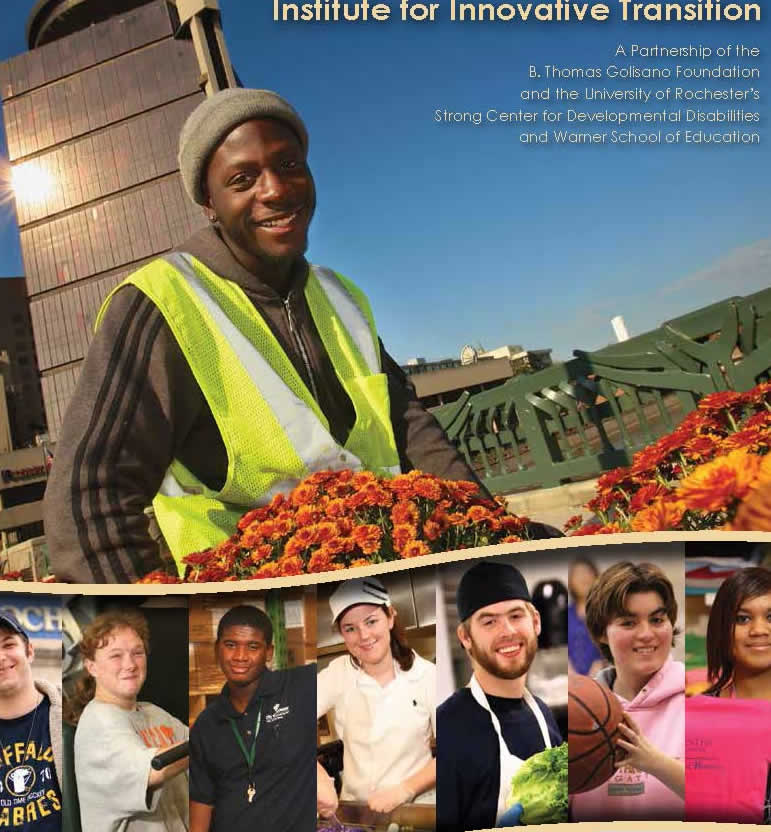 The Institute for Innovative Transition was launched in 2008 through a partnership of the Golisano Foundation, the University of Rochester's Strong Center for Developmental Disabilities and the Warner School of Education. The Institute is housed at the Strong Center for Developmental Disabilities, a division of Golisano Children's Hospital at Strong. It is made possible thanks to a $1.56 million dollar grant from the Golisano Foundation. The Institute provides support to community members in the Finger Lakes Region to effectively address transition issues for individuals with developmental disabilities, ages 14 and older. Community members include young adults with developmental disabilities, family members, local education institutions and agencies who provide service to individuals with developmental disabilities. Read more
Collaborative Community Transition Planning Process
This report was funded by the Golisano Foundation.
In April of 2006, over one hundred members of the Greater Rochester, New York
community—youth with developmental disabilities and supportive family members, educators,
administrators, advocates, community leaders, state agency and adult services personnel—
gathered to begin a comprehensive examination of the transition process from high school to the
adult world for students with developmental disabilities. Since then we have convened Expert
Panels, reviewed data, explored best practices and held many discussions to provide us with
further information and insights on transition.
The data we gathered in this process is largely qualitative and relies on people's
perceptions of their experiences. Strong themes emerged in the discussions by the Expert Panels.
National and statewide data and the local voices of individuals, families, and
professionals tell us that students with developmental disabilities are struggling through the
transition process and not realizing their hopes and dreams. The gaps in experiences and
outcomes between students with developmental disabilities and students without disabilities
demand our attention.